In a standard food retail grocery store, refrigeration systems account for between 40% and 60% of total site electricity expenditure. Because refrigeration compressors operate continuously against ambient heat rejection conditions, even fractional thermodynamic inefficiencies compound over thousands of operating hours into massive utility bills.
Thermodynamic Lift: The Underlying Driver of Electrical Draw
A refrigeration compressor is essentially a pump that lifts heat from a low-temperature reservoir (the retail food display case at +2°C or -20°C) to a higher-temperature reservoir (the outdoor atmosphere at +25°C or +35°C). The difference between the evaporating pressure and the condensing pressure is known as the compressor "lift."
The wider this pressure gap, the more mechanical work the compressor motor must perform for every kilogram of refrigerant circulated. Maintenance practices that either raise the evaporating temperature or lower the condensing temperature directly reduce this lift, thereby cutting the electrical kilowatts required to maintain store temperatures.
Key Operational Levers for Efficiency Enhancement
1. Clean Heat-Transfer Surfaces (Coils & Fins)
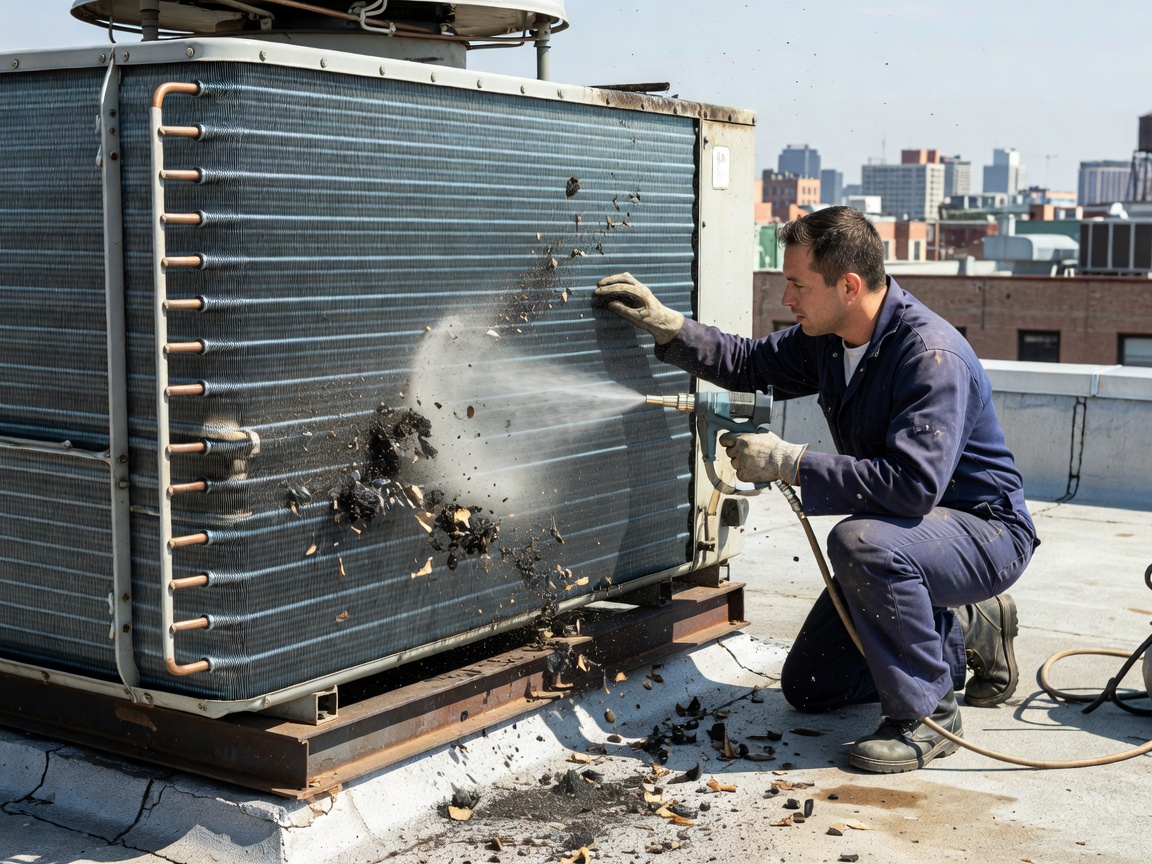
Heat transfer follows basic conduction equations. When outdoor condenser fins are clogged with cottonwood seeds, road grime, or airborne soot, the condenser cannot reject heat effectively. The condensing temperature rises, forcing the compressor to push against higher head pressures. Similarly, iced or dirty evaporator coils lower evaporating pressures, forcing the compressor to pull against a deeper vacuum. Both scenarios expand the pressure lift needlessly.
2. Dynamic Floating Head Pressure Controls
Historically, refrigeration plants were configured with fixed, artificial high-pressure setpoints (e.g., maintaining 16 bar year-round) to ensure thermal expansion valves had sufficient pressure drop to operate. Modern electronic expansion valves (EEVs), however, can operate across lower pressure drops. By enabling "floating head pressure" algorithms in the central pack controller, the system allows condensing temperatures to drop naturally alongside cool nighttime or winter ambient air.
3. Demand-Defrost vs. Rigid Timer Clocks
Many older supermarket setups still initiate electric defrost heaters on rigid schedules—for example, every six hours regardless of actual ice accumulation. Electric defrost elements consume substantial direct kilowatt-hours while radiating heat directly into the cabinet interior, which the compressors must subsequently pump out. Switching to demand-defrost systems (which initiate defrost only when coil temperature differentials or airflow pressure sensors indicate real ice accumulation) prevents thermal shock and saves redundant compressor run-time.
4. Night Blinds and Thermal Envelope Integrity
For open multi-deck dairy and beverage fixtures, closing woven micro-perforated night blinds during non-trading hours significantly reduces radiation exchange and ambient room infiltration. Verifying that store staff deploy blinds correctly and maintaining spring tension so blinds seat properly against bottom deck rails is a low-cost, high-return maintenance priority.
| System Subsystem | Degradation Phenomenon | Thermodynamic Impact | Corrective Maintenance Action |
|---|---|---|---|
| Rooftop Condensers | Airborne particulate fouling between micro-channels | Elevates condensing pressure; raises compressor lift | Quarterly low-pressure wash; comb bent fin banks |
| Expansion Devices | Mechanical hunting; uncalibrated superheat | Depresses suction pressure; risks liquid floodback | Calibrate EEV step positions; check sensing bulb thermal contact |
| Evaporator Fan Trays | Shaded-pole motors; dust-laden blades | Reduces air velocity; drives coil icing | Upgrade to high-efficiency EC motors; blade wipe-downs |
Practical Energy Audit Checklist
Store Efficiency Diagnostic Review
- Measure temperature split across condenser coils under midday solar load.
- Audit BMS suction setpoints to ensure cases are not running colder than food safety requires.
- Inspect night curtains for fabric tearing, tension loss, and side-channel dislodgement.
- Verify that anti-sweat glass heater pulsing controllers respond to ambient store humidity.
- Check cold room door auto-closers to prevent conditioned air dumping into staging corridors.
Realistic Considerations: What Maintenance Can and Cannot Do
No maintenance procedure can alter the fundamental laws of thermodynamics. While cleaning coils and optimizing setpoints ensures your equipment operates at its highest possible seasonal performance factor (SPF), it cannot compensate for fundamentally undersized pipework, poor architectural store ventilation, or end-of-life compressors with severe internal blowby. Realistic energy management combines disciplined maintenance with informed capital replacement planning.
Consultation Note: Specific energy consumption vary widely based on store layout, geographical climate zone, and merchandise mix. Operational changes should always be validated against food safety temperature guidelines.