In retail stores, refrigeration equipment doesn't get a weekend off. Unlike comfort cooling in commercial offices that shuts down after business hours, a supermarket display island or dairy room must sustain strict core temperatures twenty-four hours a day, 365 days a year. The moment a system drifts outside its engineered operating window, product shrinkage begins, store staff panic, and energy consumption climbs dramatically.
Preventive vs. Reactive Maintenance: The Operational Reality
Reactive maintenance—waiting until an audible high-pressure alarm chimes or melted ice cream pools across aisle four—is easily the most expensive way to run a store. By the time a store manager notices water dripping from a multi-deck case, the evaporator has likely been starved of airflow for weeks, forcing the central compressor rack to operate at elevated compression ratios and burning thousands of superfluous kilowatt-hours.
A disciplined preventive schedule changes this narrative entirely. By inspecting electrical contactors for pitting, checking oil sight glasses on semi-hermetic compressors, and calibrating electronic thermostatic expansion valves (TXVs), engineers catch mechanical drift while repairs remain small, controlled, and minimally invasive.
Critical Subsystems Under Daily Stress
Every commercial retail refrigeration installation hinges on a delicate balance across four core operational loops:
1. Condenser and Evaporator Heat-Transfer Surfaces
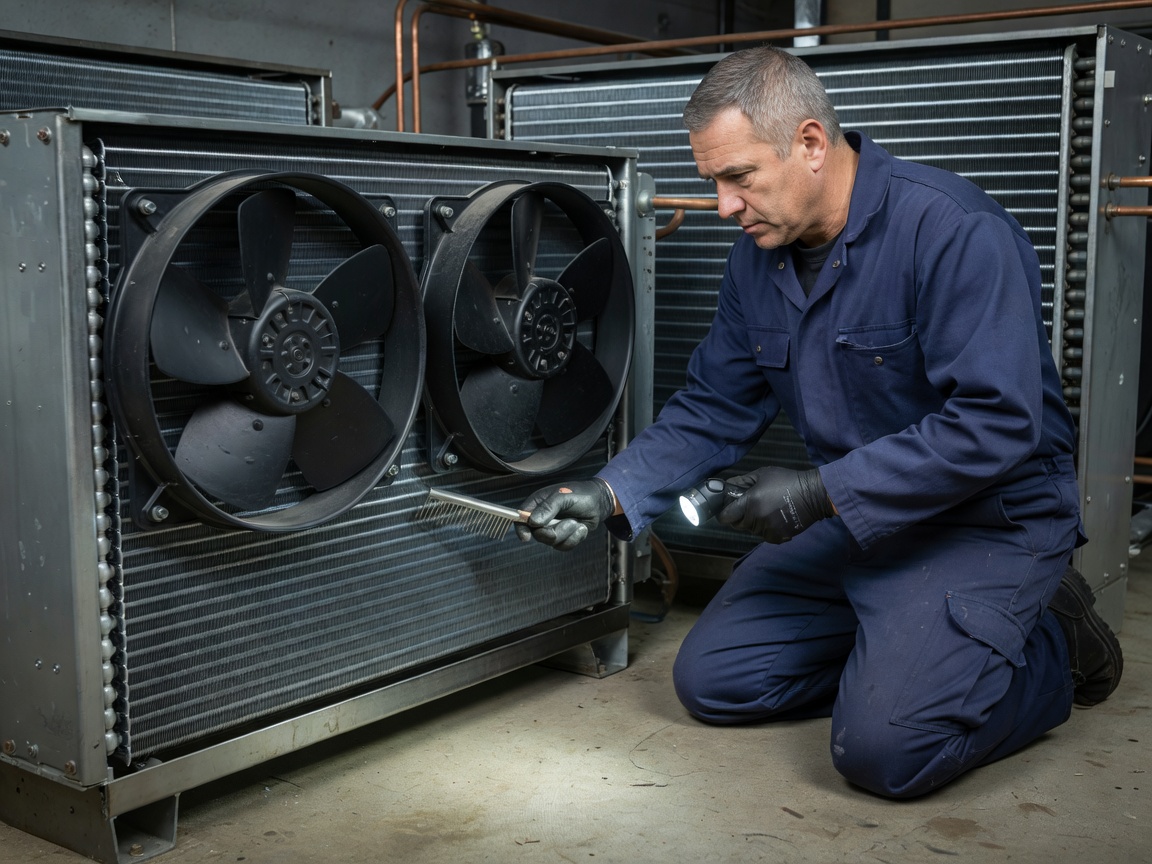
Condensers situated on rooftop enclosures or backroom lofts ingest high volumes of ambient air laden with vehicle dust, pollen, and airborne debris. A fine blanket of dirt on condenser fins acts as an insulator, driving discharge temperatures dangerously high. On the retail floor, evaporators face a different threat: retail plastic packaging films, store dust, and biological biofilms in the drain pans. Clean surfaces guarantee designed Delta-T transfer rates.
2. Fan Assemblies & Airflow Dynamics
A multi-tier display case relies entirely on an invisible curtain of cold air descending smoothly from top discharge louvers down to the bottom return grille. If an electronically commutated (EC) evaporator fan slows due to bearing resistance, or if store clerks overstock shelving past the load limit line, that air curtain shears. Warm ambient store air pours into the case, causing sudden ice accumulation and rapid temperature rise.
3. Drainage and Defrost Management
Defrost heaters—whether electric resistance rods or hot gas bypass loops—must melt accumulated frost quickly without elevating product core temperatures. However, melting ice is harmless only if it can drain away immediately. Blocked condensate drains lead directly to iced-over case bases, water damage to sales floors, and costly slip-and-fall hazards for shoppers.
4. Magnetic Gaskets and Door Hinges
Glass-door freezer cabinets rely on resilient, flexible PVC magnetic gaskets to seal sub-zero air against humid store ambient conditions. Even a minor 2mm gap allows moist air infiltration, manifesting immediately as thick white frost on cabinet ceiling glass and premature evaporator icing.
| Maintenance Strategy | Typical Response Window | Operational Impact | Energy & Equipment Longevity |
|---|---|---|---|
| Reactive (Emergency Callout) | 2 to 6 hours after total failure | High inventory loss risk; emergency store aisle disruption; premium service rates | Compromised compressor winding life; chronic thermal cycling stress |
| Scheduled Preventive Care | Pre-planned monthly or quarterly blocks | Zero customer interruption; work scheduled during off-peak stock hours | Maintains manufacturer design COP; minimizes parasitic electrical drag |
Practical Field Inspection Checklist
Standard Retail Preventive Sequence
- Measure and log compressor crankcase oil levels and operating oil pressure differential.
- Scan electrical panels with infrared thermography to identify high-resistance terminations.
- Wash condenser coils with biodegradable low-pressure cleaning solution; straighten bent fins.
- Verify electronic expansion valve (EEV) superheat calibration under standard thermal load.
- Inspect door closing torque, self-closing cam risers, and magnetic perimeter seal contact.
- Flush primary drain troughs and verify condensate trace-heater continuity before defrost test.
Component Limitations and Practical Realities
While preventive maintenance substantially lowers operational volatility, it does not make mechanical components immortal. Compressor valves inevitably suffer mechanical fatigue after tens of thousands of runtime hours; capillary tubes and solenoid coils can fail abruptly. Store teams should acknowledge that preventive care is about eliminating premature failures and discovering wear trends before catastrophic rupture occurs.
Note: Exact service frequencies, refrigerant handling compliance, and pressure safety testing must align with manufacturer specifications and local environmental regulations. Always consult a certified refrigeration professional.